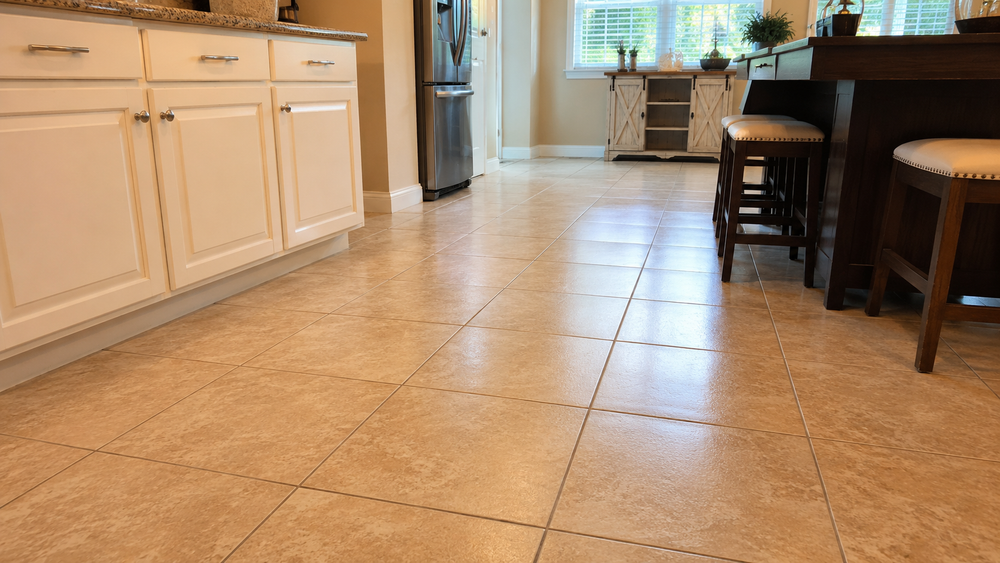
When “Clean” Floors Still Don’t Look Clean
You finish mopping the kitchen, wait for the floor to dry, and then notice something frustrating: it still looks a little dull.
Maybe there are streaks near the windows. Perhaps the tiles look clean but the grout lines seem darker. Or the floor feels slightly sticky even though you just cleaned it.
This is more common than most homeowners realize, especially in homes around Melbourne and West Melbourne, Florida.
The problem isn't always that the floor needs more cleaner. Sometimes, using more product actually makes things worse.
Here are a few interesting reasons it happens.
1. Too Much Floor Cleaner Can Leave the Floor Looking Dirtier
More soap doesn't necessarily mean a cleaner floor.
When too much cleaning solution is mixed into the water, a thin layer of product can remain on the tile after the floor dries.
You may not immediately see the residue, but it can:
Make tile look cloudy
Leave visible streaks
Create a slightly sticky feeling
Attract new dust and dirt faster
If a floor seems to become dirty again unusually quickly after mopping, product buildup may be part of the problem.
Sometimes a properly diluted cleaner and clean rinse water work better than adding another layer of product.
2. Your Tile May Be Clean While the Grout Is Not
Here's something interesting about tile floors: the tile and grout behave very differently.
The surface of ceramic or porcelain tile is relatively easy to wipe clean, while many types of grout are more porous.
That means dirt, cooking residue, moisture, and everyday traffic can gradually settle into the grout lines.
The result?
You mop the entire floor and the tiles look great, but those slightly darker lines still make the room appear less clean.
This is particularly noticeable on light-colored grout.
Instead of repeatedly mopping the whole floor, occasionally giving the grout some separate attention can make a surprisingly large visual difference.
3. Florida Sand Doesn't Always Stay at the Beach
Living near the Space Coast means small particles of sand and outdoor grit can easily travel inside.
They arrive on:
Shoes
Sandals
Pet paws
Beach bags
Outdoor furniture
Children's belongings
Some particles are obvious. Others are so fine that they blend into the floor.
Once wet, that fine grit can move around with the mop instead of being completely removed.
One useful habit is simple:
Vacuum or sweep thoroughly before mopping.
Pay special attention to entryways, sliding doors, kitchens, and the areas underneath dining tables.
Removing dry debris first prevents it from turning into muddy residue when water is introduced.
4. The Water in Your Mop Bucket Changes Faster Than You Think
Here's an easy experiment.
Look at your mop water after cleaning only one busy room.
It may already be noticeably darker.
If that same water is used throughout the rest of the house, some of what was removed from the first area can end up being redistributed elsewhere.
Changing the water during a larger cleaning session can make more difference than people expect.
High-traffic areas such as:
Kitchens
Entryways
Hallways
Bathrooms
are often better cleaned before starting again with fresh water for other rooms.
5. Kitchen Tile Has a Different Kind of Dirt
Bathroom dirt and kitchen dirt aren't exactly the same.
In kitchens, tiny amounts of cooking oil can eventually settle on nearby surfaces and floors.
You may never see an obvious greasy layer.
Instead, you begin noticing that one area of the tile feels slightly different or becomes dirty faster.
This is common around:
The stove
The kitchen island
The refrigerator
The trash can
Food-preparation areas
Dust sticks much more easily to an oily surface, which can make a recently cleaned kitchen floor lose its fresh appearance faster.
That's one reason occasional detailed kitchen cleaning matters beyond simply running a mop across the room.
6. Bathroom Humidity Changes the Cleaning Routine
Bathrooms deal with something most other rooms don't: frequent moisture.
Showers create humidity, water reaches corners and grout lines, and some surfaces stay damp longer than we realize.
A bathroom may therefore require attention not only to the center of the floor but also to:
Shower edges
Corners
Grout lines
Areas behind the toilet
The base of the vanity
Shower-door tracks
Good ventilation after showers also helps these areas dry more effectively.
Sometimes keeping a bathroom looking clean is less about scrubbing harder and more about preventing moisture and residue from sitting there continuously.
7. Don't Forget What's Under the Mop
Another overlooked detail is the cleaning equipment itself.
A mop that hasn't been thoroughly rinsed or a reusable pad that has already cleaned several rooms can carry residue.
The same applies to vacuum filters, brushes, buckets, and microfiber cloths.
Cleaning tools need cleaning too.
Otherwise, you're asking a dirty tool to create a clean surface.
A Small Test Can Reveal a Lot
If you're unsure whether your tile has product buildup, try comparing a small section.
Clean one discreet area using the normal amount of product.
Clean another nearby section using less product according to the manufacturer's instructions and fresh water.
After both sections completely dry, look at them from an angle with natural light coming through the window.
Sometimes you'll notice a difference immediately.
Natural daylight is excellent at revealing:
Streaks
Residue
Dust along edges
Smudges
Uneven shine
It's one reason a floor may look perfect at night but suddenly show every little detail the next morning.
Your Floor May Not Need More Cleaning — It May Need Different Cleaning
When a tile floor continually looks dull, the solution isn't always to scrub harder or use stronger chemicals.
It may simply need a better process:
Remove dry debris first → use the correct amount of product → change dirty water → give grout separate attention → allow the floor to dry properly.
Small adjustments often produce better results than repeatedly cleaning the same surface the same way.
At M.B Cleaning & Tile LLC, we see cleaning as more than making the most visible surfaces shine. Details like grout lines, floor edges, kitchen buildup, and high-traffic areas can completely change how fresh a home feels.
For homes throughout Melbourne, West Melbourne, and the surrounding Brevard County area, understanding the way Florida homes collect moisture, sand, and everyday buildup can make maintaining a clean space much easier.
Sometimes the secret to a cleaner floor isn't another pass with the mop.
It's understanding what's actually making it look dirty.